
Compare Sullivan County Property Value Types
Every number gains meaning from the record behind it. Sullivan County parcel cards follow Indiana's Market Value in Use. A deed records a transfer, while a market appraisal weighs one date and one purpose.
| Value type | What it means | Where it is recorded |
|---|---|---|
| Assessed value | The tax-system value based on Market Value in Use | Assessor parcel card |
| Land value | The assessed land component apart from improvements | Assessor parcel card |
| Improvement value | The assessed building and improvement component | Assessor parcel card |
| Recorded consideration or sale data | A transaction figure or transfer information when disclosed | Recorded deed and parcel card when supplied |
| Market opinion | An estimate tied to a date, scope, and evidence | Licensed appraisal or market analysis |
Indiana targets 100 percent of market-value-in-use for assessments. That does not make the tax figure a sale price. Timing, property use, physical facts, and the character of a transaction can all pull the two apart.
Read Sullivan County's Value Components Together
The WTH ThinkGIS parcel card anchors local assessment details. It lists owner, mailing and situs addresses, parcel number, land and improvement components, and legal description. Physical characteristics and sales or transfer information appear where supplied.
Add land and improvement context before comparing total assessed value across parcels. A town lot splits value differently than rural acreage. Building size, land area, location, and building type are among the characteristics the Assessor maintains.
Note: Use the assessment year shown on the live card because a value without its effective period can mislead.
See a Sullivan County Assessed-Value Record
This sample parcel card shows a Sullivan County assessment record.
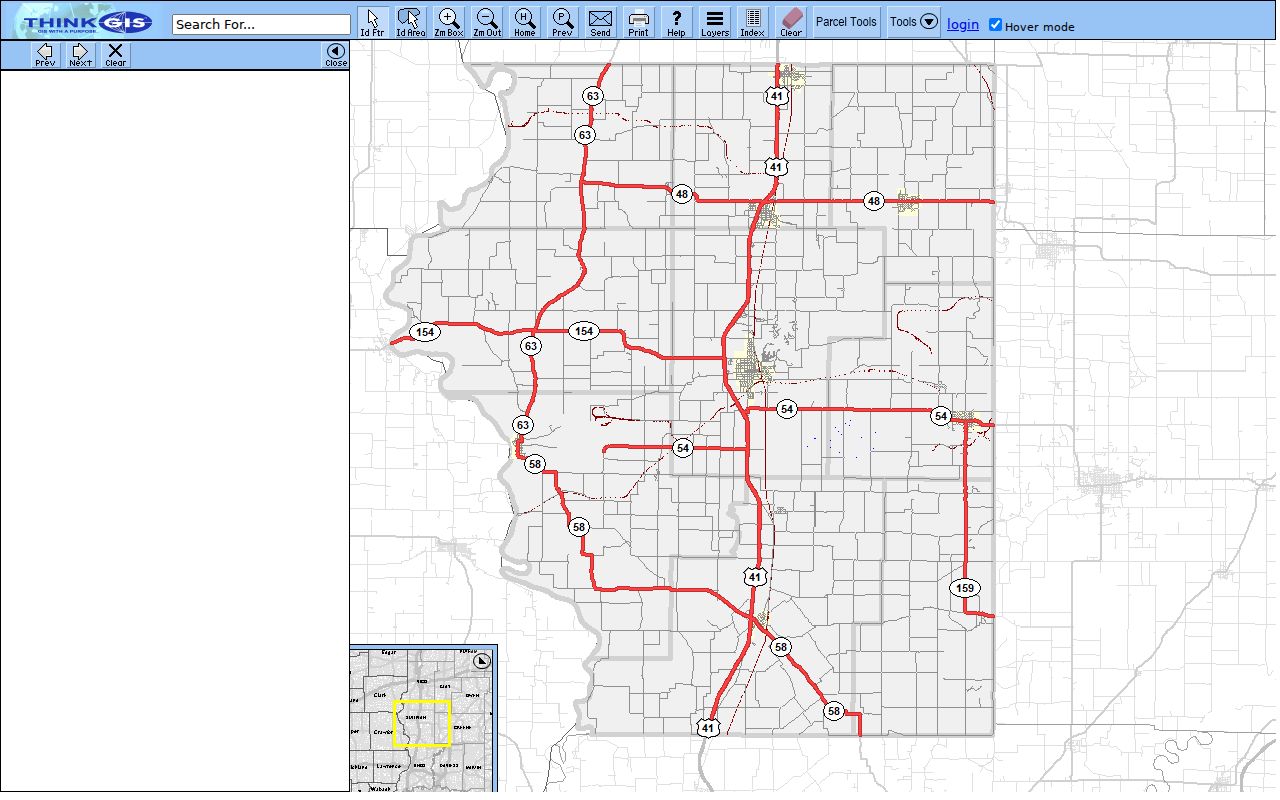
The live card is script-rendered. Read only the labels and figures it currently displays, and treat the example as a view of the source rather than a reusable estimate for another property.
Look Up Sullivan County Property Value by Parcel
An address is the convenient entry point. The full parcel number is the better cross-check, keeping the value tied to the right land when postal labels or owner names differ.
- Search the situs address in WTH and confirm the mapped parcel.
- Copy the full parcel key and note the assessment year.
- Read land, improvement, and total assessed values together with the physical characteristics shown.
- Check any displayed sale or transfer information, then compare it with the newest matching deed in the Recorder index.
- Ask the Assessor for older assessment material when the web card does not show the needed year.
- Assessed value
- The county's value under Indiana assessment rules.
- Market Value in Use
- Indiana's value standard based on the property's current use.
- Assessment ratio
- Assessed value divided by sale price in a ratio study.
- Reassessment
- The process of updating taxable property characteristics and value.
Place Sullivan County Values in the Four-Year Cycle
Indiana Code 6-1.1-4-4 sends assessors to 25 percent of parcels each year. A full inspection cycle takes four years to finish. Assessments are pegged to January 1. Annual trending can nudge values between physical visits, even on parcels nobody has walked recently.
That cadence matters for anyone comparing parcels. Two properties on the same road can see their changes recognized at different points in the cycle. Both sit under the same state valuation framework. A card's year and its listed characteristics explain much of the gap. No market conclusion should be drawn before that.
Explain a Change in Sullivan County Assessed Value
A changed figure can reflect annual trending, new construction, demolition, corrected characteristics, a parcel split, or the inspection cycle. Compare land and improvement components across assessment years first. Only then attribute a shift to the market. The Assessor's record identifies the parcel and year compared. Permit information is separate and may require a city or town request. Farmersburg and Shelburn publish no searchable online permit system. In the City of Sullivan, the Building Commissioner handles permit and code records by phone or counter.
Calculate a Sullivan County Sale Ratio Carefully
Indiana's ratio study divides assessed value by sale price. A ratio near the state's target can inform a valid sample. A single transfer cannot judge a whole neighborhood.
| Numerator | Assessed value for the matching assessment period |
|---|---|
| Denominator | Verified sale price from a valid transaction |
| Result | A ratio for that sale, not an appraisal of the next sale |
Exclude mismatched years from any sample. Investigate unusual deed types, partial-interest transfers, family transactions, and changed parcels before drawing a conclusion.
Separate Sullivan County Sale Evidence From Assessment
The newest deed in Doxpop can confirm transfer timing. It may also supply document or legal-description detail. The parcel card may carry sales data where supplied. Neither source guarantees a visible figure was an open-market price.
Sullivan County's 2025 market document includes asking prices. It also lists construction years, lot or acreage data, and price per square foot. Those examples illustrate context. They are not a countywide appreciation rate. Asking price, recorded consideration, assessed value, and final sale price remain distinct numbers.
Distinguish Sullivan County Value From Taxable Impact
Exemptions and deductions can change taxable impact without rewriting what a property would command in a sale. The value question stops at meaning and source. Tax bills, payment calculations, and appeal procedures belong to the county's property tax records.
Call the Sullivan County Assessor about any unclear flag. The office is Room 203, 100 Courthouse Square. Phone 812-268-5110 weekdays, 8 a.m. to 4 p.m. Ask for the specific parcel and assessment year, not a general estimate.
Know What Sullivan County Property Value Cannot Prove
Mass assessment supports a uniform tax system. It does not inspect a home for a particular buyer, guarantee condition, price an easement, or predict the terms of a future deal. A private appraisal differs too. Its date and assignment are simply different.
Value and price differ. Sullivan County assessed value serves taxation and is not a promise of what the property would sell for. It is not a licensed appraisal.
Use official records to identify each figure and its year. Obtain qualified advice when a purchase, estate, or other high-stakes decision needs a current market opinion.